Business travel under the Visa Waiver Program in 2026 is one of the largest gray zones in CBP policy. Meetings, conferences, and contract negotiation are clearly fine under the Visa Waiver Program. Paid speaking, fee-for-service work, and local employment clearly require a full B-1 visa. The trip purposes in between — training a US team, attending a US trade show with a sales booth, accepting an honorarium under the narrow nine-day exception — fall under specific exceptions most travelers cannot recite. This guide is the decision framework for the ambiguous trip.
What counts as a business activity under VWP
The Visa Waiver Program covers business activities defined narrowly in 22 CFR §41.31. The bright line: you may engage in business activities that benefit your employer abroad, but you may not perform services that benefit a US employer or that compete with US workers in the local labour market. Meetings, conference attendance, and contract negotiation fall squarely on the permitted side. Paid speaking, performing for compensation, and local employment fall on the prohibited side.
The middle ground — paid training, sales booth staffing, after-sales support — is where the policy gets technical and most travelers get it wrong.
Permitted: meetings, conferences, contract talks
Permitted business activities under ESTA include: attending meetings (sales, partnership, board), attending conferences as a delegate, negotiating contracts on behalf of a foreign employer, taking orders from US clients for goods to be produced abroad, training that benefits the foreign employer (you are the trainee, the trainer is incidental), purchasing US goods for export, attending trade shows as an attendee.
Permitted, with caveats: serving as a panel speaker at a conference under the nine-day speaker rule (no honorarium over $1,000 per institution, no more than one speaking engagement per institution per six months), attending a US trade show with a sales booth (you may take orders but not deliver goods or services).
Not permitted: paid speaking and local employment
Off-limits without a proper visa: receiving wages or compensation from a US source (other than reimbursement of expenses), performing services for a US employer that a US worker would otherwise perform, working for a US subsidiary as a transferred employee (this requires an L visa), or performing paid speaking outside the nine-day rule.
Two pitfalls: receiving a stipend from a US foundation for a research visit is treated as compensation and requires a J visa; receiving an honorarium for a paid keynote at a US conference requires the B-1 category unless that limited exception applies.
Further reading and official sources
- ESTA fee payment, refunds, and fraud prevention
- ESTA for business travelers
- TSA PreCheck and Global Entry for ESTA visitors
- CBP international visitors
- the official CBP ESTA portal
Stipend and reimbursement rules
Reimbursement is allowed under ESTA. Your overseas employer or the US host may reimburse documented travel expenses (flights, hotels, meals) without triggering an employment classification. A per-diem allowance is treated similarly to reimbursement so long as it does not exceed the federal per-diem rate for the city of travel. The rate for major US cities in 2026 is published on gsa.gov.
Stipends, fees-for-service, and salary payments are not allowed. The IRS treats the income as US-source, the employer must issue a 1099, and the traveler should have applied for that visa instead.
Training, certification, and trade shows
Training under ESTA is permitted when your non-US firm pays the traveler and the training provider is US-based. The classic case: an employee of a foreign subsidiary travels to the US headquarters for one to four weeks of training. The employee’s salary continues from the foreign payroll; the US headquarters pays only the training cost. ESTA is the correct authorization.
If the US headquarters pays the employee directly during the training, the employee must hold an L visa or an H visa, not ESTA. The misclassification is a common audit target for ICE worksite enforcement.
When to switch to a B1 visa
The signal that a trip needs the consular route rather than an ESTA: the activity will appear on a US tax form. If the traveler is paid by a US source on a 1099 or W-2, an ESTA is not legal. If the traveler is paid by a foreign source and the trip’s purpose is documented as business meetings or training, ESTA is correct.
The grey zone — non-cash compensation, performance reviews, ad-hoc speaking — is best discussed with US immigration counsel before booking the trip.
FAQ
Can I attend a US trade show on an ESTA?
Yes. Attending as a visitor is permitted. Staffing a sales booth is also permitted provided you take orders only and do not deliver goods or services on US soil.
Can I be paid for speaking at a US conference under the VWP?
Only under the narrow nine-day exception: no more than $1,000 per institution, no more than one speaking engagement per institution per six months.
Can I train US team members on an ESTA?
Yes, if your overseas employer pays you and the training is incidental to your foreign role. If the US team pays you directly, you need an L or H visa.
Can I work remotely from the US as a visa-waiver visitor?
Grey zone. Working remotely for a foreign employer while physically in the US is technically not VWP-prohibited but is increasingly questioned at the border. Carry documentation of the home-country company.
Do I need a B1 visa for a contract negotiation?
No. Contract negotiation is squarely on the permitted side of VWP. ESTA is correct.

Why a Business ESTA Is Not the Same as a B-1 Visa
The ESTA approves business travel under the Visa Waiver Program, but the legal authority is narrower than the B-1 category. The statute lists the specific business activities permitted: attending meetings, negotiating contracts, consulting with associates, attending conferences and trade shows, and conducting independent research. Anything outside this list — even something as common as billable consulting at a client site — is treated as productive labor and triggers 8 CFR §214.2(b) employment restrictions. A B-1 applicant must demonstrate the same activity profile but undergoes consular review; the visa-waiver traveler self-certifies and accepts the same statutory limits without that interview.
The practical effect is that the ESTA holder must be able to articulate the purpose of every U.S. visit to a CBP officer at primary inspection. 9 FAM 402.2-5 instructs consular and border officers to ask three questions: who is paying you, where does the work product belong, and where will you receive payment. Provided the salary source is your home employer abroad, the work product ships back overseas, and U.S. compensation is limited to incidental expenses, the ESTA covers the visit.
Conference and Trade-Show Activities ESTA Allows
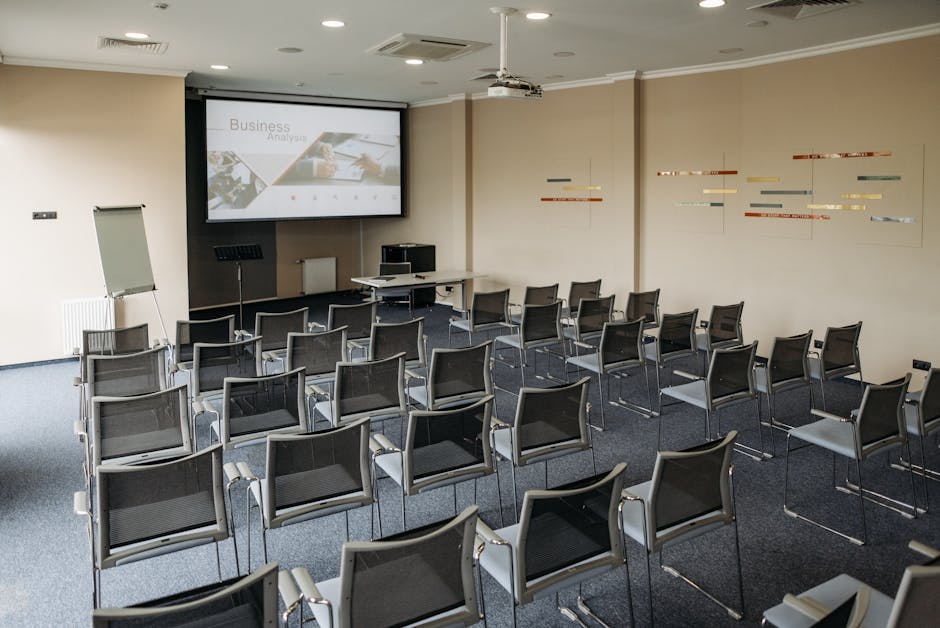
Attending a conference — listening to presentations, networking with attendees, staffing your employer’s booth — sits squarely inside the ESTA’s permitted scope. Speaking at a conference is also generally allowed if the honorarium is paid by the conference organizer and remitted to your bank back home. Selling product directly to U.S. customers from the trade-show floor crosses into productive labor and falls outside that permitted list. The line is whether the transaction is closed on U.S. soil or merely sourced from there for completion abroad.
Document the conference. Carry the invitation letter, the agenda, and proof of registration. CBP officers at primary inspection routinely ask trade-show attendees for the booth number and the exhibition hall layout. A two-sentence answer that names the venue, the dates, and the booth assignment routinely clears secondary review in under five minutes.
Activities That Cross the Line into Productive Work
The clearest line-crossing activity is hands-on technical work at a client site that produces a billable deliverable in the United States. Even a one-day “go-live” assistance call for a software deployment can be characterized as productive labor when the deliverable is generated on U.S. soil. The fix is straightforward: have the deliverable produced offshore and merely demonstrated or installed during the U.S. visit, or pursue an H-1B, L-1, or B-1 visa with the consulate ahead of travel.
A second common trap is interviewing for a US-based position. ESTA holders may attend a job interview, but signing an offer letter or starting onboarding paperwork is forbidden under §214.2(b). A new hire who accepts an offer during the trip must depart and return on the appropriate work visa before reporting to duty. Carry written confirmation that the visit is interview-only if your itinerary is interview-heavy.

Frequently Asked Questions
Can I sign a contract while on a visa-waiver business trip?
Yes, signing a contract on behalf of your employer abroad is permitted under §41.31 provided the contract performance occurs outside the United States. If the contract obligates you personally to perform work in the U.S., that triggers that same employment restriction and you need a B-1 or other appropriate visa.
May I receive payment from an American company during the visit?
Only as reimbursement of incidental expenses (hotel, meals, ground transport) or as an honorarium from a non-profit or academic organization paid into your overseas account. The same rule bars salary, wages, or commissions from a domestic payor for work performed stateside, even when the underlying activity is otherwise permitted.
What if my meeting agenda includes a paid training session?
Receiving training in the United States is permitted, including paid training run by your employer back home. Delivering paid training to U.S. employees of a U.S. company is not — that is treated as productive labor under §214.2(b). When in doubt, request a written confirmation from your travel-and-immigration team before departure, and carry it in your travel folder.