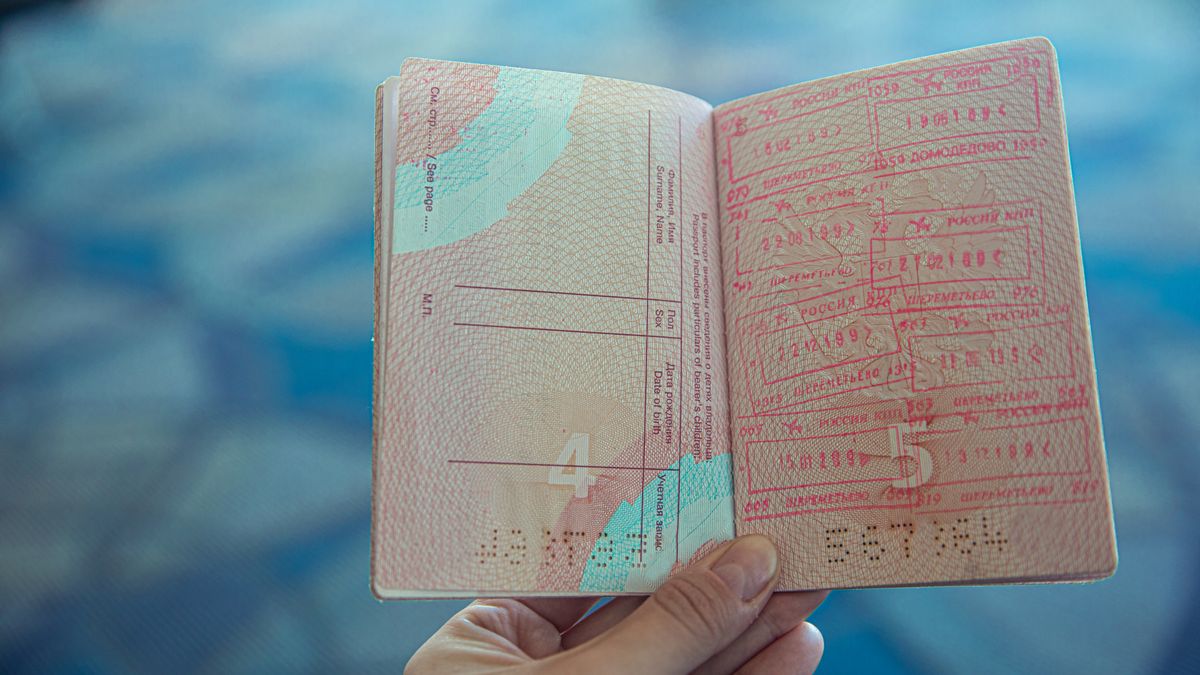
TSA PreCheck gets you into the shorter security lines at more than 200 US airports, where members keep their shoes, belts, light jackets, laptops, and 3-1-1 liquids inside their bags and clear screening in five minutes or less on average. This guide walks through every step of the PreCheck enrollment process in 2026 — what it costs, who can qualify, which documents to bring, where to enroll, how long approval takes, and how the program compares with Global Entry and CLEAR. It also answers the question we hear most often from international travellers: does PreCheck work for visitors arriving on ESTA? The short answer is no, and the explanation below makes clear why.
TL;DR: ESTA is the US visa-waiver authorization for travelers from 41 eligible countries visiting the US for up to 90 days. It costs $40, is valid for 2 years (or until passport expiry), and allows multiple short business or tourist visits. Apply online before booking flights — most approvals arrive within minutes via the official ESTA website.
| Quick Facts — US ESTA | |
|---|---|
| Fee | $40 (one-time) |
| Validity | 2 years or until passport expiry |
| Max stay | 90 days per visit |
| Processing time | Usually minutes; up to 72 hours in some cases |
| Eligible | VWP countries only |
PreCheck is a Trusted Traveler Program run by the Transportation Security Administration, an agency of the US Department of Homeland Security. Eligible applicants pay a one-time fee, complete an online form, attend a 10-minute enrollment visit for fingerprints and a photo, and — once vetted — receive a Known Traveler Number (KTN) valid for five years. Adding the KTN to a flight reservation routes the traveller into the dedicated PreCheck lane at participating US airports. The current list of participating airlines and airports is published on tsa.gov/precheck.
PreCheck is sometimes confused with the privately-run CLEAR Plus service, with airline elite-tier shortcuts, and even with Global Entry — and the differences matter when you are deciding whether to spend $77.95 on a five-year membership. PreCheck itself is a federal Trusted Traveler vetting process; CLEAR is a commercial identity service; airline elite shortcuts are commercial perks tied to the carrier; Global Entry is a separate Trusted Traveler Program that includes PreCheck as a bundled benefit. Throughout this 2026 guide we treat each program separately so you can map your travel pattern — domestic only, mixed domestic and international, frequent international long-haul, occasional ESTA visit to America — onto the right combination.
We also pay close attention to the rules that change in 2026: Telos has joined IDEMIA and CLEAR Secure as an approved enrollment provider, online renewal now covers approximately 75% of returning members without a fresh in-person appointment, and children aged 17 or younger continue to fly on a parent or guardian’s reservation with PreCheck benefits at no extra cost. Each of these mechanics is unpacked in the relevant section below.
What is the TSA PreCheck program?
TSA PreCheck is an expedited domestic-airport screening program available to US citizens, US nationals, and green-card holders. It launched in December 2011 as a partnership between airlines, the TSA, and Customs and Border Protection (CBP). The program now covers more than 20 million approved members, more than 200 US airports, and about 90 participating airlines, including Delta, United, American, Southwest, Alaska, JetBlue, Hawaiian, Allegiant, Frontier, Spirit, and most foreign carriers operating domestic legs.
Members benefit from a separate, lower-volume queue and lighter screening: shoes, belts, and light jackets remain on; laptops and compliant 3-1-1 liquids stay in the carry-on. The TSA reports an average 2026 wait of under five minutes for 96% of PreCheck travellers. The program is regulatory rather than commercial — there is no upgrade subscription, no airline-tier requirement, and no annual fee.
- Five-year membership tied to the applicant, not a credit card or airline.
- Single Known Traveler Number (KTN) used across all eligible airlines.
- Applies to most domestic departures from US airports and to many international departures from US airports operated by participating carriers.
- Expedited screening for minors under 18 flying on the same reservation as a PreCheck-eligible parent or guardian.
- Recognised across the wider DHS Trusted Traveler family — Global Entry, NEXUS, and SENTRI members all receive PreCheck benefits automatically.

Pro tip: Apply for your ESTA at least 72 hours before your flight. Although most decisions are instant, some applications require additional review — and your airline may deny boarding without an approved ESTA in their system.
TSA PreCheck application: step-by-step process
There are two phases to every PreCheck enrollment. The first is the online pre-enrollment form. The second is the on-site visit for biometrics and document verification. Allow about 30 minutes total for both.
Step 1 — Online pre-enrollment
- Open tsa.gov/precheck/how-to-apply and choose one of the three approved enrollment providers (IDEMIA, Telos, or CLEAR Secure). The membership benefit is identical across providers; only the price varies slightly.
- Complete the online form: full legal name as it appears on your passport, date of birth, mailing address, citizenship or immigration status, and answers to disqualifying-offence questions.
- Pay the application fee (see the “Cost” section below). The fee is non-refundable even if your application is denied.
- Book your on-site enrollment slot at a centre near you. Slots in major metros book out one to four weeks in advance; suburban centres are usually quicker.
Step 2 — In-person enrollment appointment
Bring the originals of every required identity and citizenship document (no photocopies, no expired IDs). The enrollment officer fingerprints all ten fingers, takes a digital photograph, scans the documents, and asks a short set of background questions. The appointment normally finishes in 10 minutes.
Step 3 — Background vetting
After enrollment, the TSA conducts a security threat assessment. The agency cross-checks applicant data against terrorism, criminal, and immigration databases held by DHS, the FBI, and CBP. Most applications are approved within three to five days; the TSA notes that “more than 90% of applicants are approved within three to five days, and the remainder within 60 days.” Once approved, your KTN arrives by email and shows up immediately on the provider portal.

Required documents for TSA PreCheck enrollment
You must present at least two documents at enrollment: one proving identity and one proving citizenship or lawful permanent resident status. A single combined document — such as a valid US passport — satisfies both. The full list is published on tsa.gov/precheck/required-documents.
Acceptable single combined documents
- Valid, unexpired US passport book or US passport card.
- Permanent Resident Card (Form I-551, “green card”).
- Enhanced Tribal Card or Free and Secure Trade (FAST) card with photograph.
Acceptable two-document combinations
- Government-issued photo ID (such as a state driver’s licence) plus US birth certificate.
- Government-issued photo ID plus Certificate of Naturalization (Form N-550 or N-570).
- Government-issued photo ID plus Consular Report of Birth Abroad (Form FS-240, DS-1350, or FS-545).
If your legal name differs from the name on the photo ID — for example after marriage, divorce, or a court-ordered change — bring the certified court order, marriage certificate, or divorce decree showing the link between the two names. Missing documents are the single most common reason an enrollment appointment ends without enrollment, so check twice the evening before.
How much does PreCheck cost in 2026?
TSA PreCheck membership lasts five years from the date the KTN is issued. The 2026 fee is set by the enrollment provider:
- $77.95 — IDEMIA (the original PreCheck provider, the largest enrollment-centre network, online renewal).
- $70 — Telos (no in-person reschedule fee, fewer locations but identical membership).
- $77.95 — CLEAR Secure (bundles optional CLEAR Plus membership; PreCheck-only enrollment is the same price as IDEMIA).
All three are official TSA partners listed at dhs.gov/trusted-traveler-programs. Several US-issued credit cards reimburse the application fee as a statement credit every four to five years; check the card benefits before paying out of pocket. The fee is non-refundable even if the TSA denies the application after vetting.
Where to enroll: TSA PreCheck centres across the US
There are roughly 600 TSA PreCheck enrollment centres open in 2026, including standalone offices in shopping plazas and dedicated counters inside airports. Major airports usually host a centre in the public terminal area (no boarding pass required to access). Suburban centres tend to have shorter waits than airport centres.
Typical enrollment-centre coverage by region
- Northeast (NY, NJ, MA, PA, CT): dense network of 80+ centres including JFK, LGA, EWR, BOS, PHL, BWI; suburban Walgreens and Staples partners host satellite locations.
- Mid-Atlantic and South (DC, VA, NC, GA, FL, TX): 120+ centres including DCA, IAD, ATL, MCO, MIA, FLL, IAH, DFW, AUS; airport counters are open seven days a week in most hubs.
- Midwest (IL, MI, OH, MN, MO, WI): 90+ centres including ORD, DTW, MSP, STL, MKE; Chicago downtown and Detroit Royal Oak are the highest-throughput non-airport locations.
- Mountain and West Coast (CO, AZ, NV, UT, CA, WA, OR): 100+ centres including DEN, PHX, LAS, SLC, LAX, SFO, SAN, SEA, PDX; Bay Area applicants often find faster slots in Hayward or San Mateo than at SFO.
- Alaska, Hawaii, and territories: centres at ANC, FAI, HNL, OGG, KOA, and SJU (Puerto Rico).
Use the location map on the chosen provider’s website to filter by ZIP code, available appointment date, and language support. Spanish, Mandarin, and Vietnamese interpreters are available in roughly 30% of centres; bilingual staff are noted in each centre listing.

How long does TSA PreCheck approval take?
From the moment fingerprints are submitted, expect the following 2026 timing benchmarks based on TSA published service-level data:
- 3 to 5 days: approval for more than 90% of straightforward applications. The KTN is delivered by email and visible on the provider portal.
- 5 to 14 days: typical window if the applicant has a common name that produces extra database matches requiring manual review.
- 30 to 60 days: applies if the security threat assessment flags an old conviction, an immigration record review, or a name discrepancy. Applicants receive a status email and may be asked to submit further documentation.
- Beyond 60 days: rare, but happens when the FBI rap-sheet response is delayed or when a court-record correction is in progress; the TSA Customer Service centre at 1-866-289-9673 is the appropriate escalation route.
The TSA recommends adding the KTN to flight bookings the moment it arrives. The KTN does not back-date onto reservations issued before approval — you must edit the reservation manually in the airline’s “Manage Booking” page, and the boarding pass must be re-issued.
TSA PreCheck vs Global Entry vs CLEAR: which one is right?
Three programs are commonly confused. They serve different journeys, and only the first two are run by the federal government. CLEAR is a private biometric-identity service regulated by the TSA but not part of the Trusted Traveler family.
Quick comparison
- TSA PreCheck — $77.95 / 5 yrs: domestic-airport security only, US citizens / nationals / LPRs only, ~600 enrollment centres, in-person interview.
- Global Entry — $120 / 5 yrs: includes TSA PreCheck PLUS expedited US customs entry on international arrivals; available to US citizens, LPRs, and citizens of about 17 partner countries (UK, Germany, Mexico, India, Korea, Singapore, etc.); enrollment centres only at major airports and selected ports of entry.
- CLEAR Plus — $209 / yr: private membership using fingerprint or iris scan to skip the TSA ID-check podium (not the X-ray) at about 60 US airports and certain stadiums; works alongside, not instead of, PreCheck. CBP confirms eligibility rules at cbp.gov/travel/trusted-traveler-programs/global-entry.
The most common 2026 stack for frequent flyers who already qualify for Global Entry is Global Entry alone — it includes PreCheck and saves the second application. Add CLEAR if you regularly fly from one of its busiest airport partners (LAX, ATL, JFK, DFW, DEN, ORD, SFO, MCO, LAS) and want to skip the ID-check queue as well as the X-ray queue. For US citizens who only fly domestically and never internationally, plain TSA PreCheck remains the cheapest option.
Can ESTA travellers join TSA PreCheck? (No — here’s why)
Visitors arriving in the US on ESTA cannot join TSA PreCheck. Eligibility is restricted to US citizens, US nationals, and US lawful permanent residents (green card holders). The Visa Waiver Program admits ESTA travellers for stays of up to 90 days as visitors; it does not confer the residency status that the Trusted Traveler regulations require.
International visitors who fly home through a US airport will sometimes notice that their boarding pass shows the “TSAPRE” indicator. This usually happens because the passenger holds Global Entry — a program that does admit citizens of partner countries — and Global Entry membership automatically grants TSA PreCheck benefits. Without Global Entry, a non-resident visitor cannot enrol in PreCheck on its own.
Practical alternatives for ESTA travellers
- Global Entry for partner-country citizens: if your country has a Global Entry agreement with the US — the United Kingdom, Germany, Switzerland, the Netherlands, Argentina, Bahrain, Brazil, Colombia, Croatia, Dominican Republic, India, Israel, Mexico, Panama, Saudi Arabia, Singapore, South Korea, Taiwan — you can apply for Global Entry from abroad, complete the conditional approval, and finish enrollment at a US airport. Eligibility and process are detailed at cbp.gov/travel/trusted-traveler-programs/global-entry.
- Standard VWP screening: ESTA travellers without Global Entry use the regular TSA security lane on departing US flights. Wait times at major airports average 12 to 25 minutes during peak hours; allow at least 90 minutes from kerb to gate for domestic transfers and 180 minutes for international departures.
- CLEAR Plus for visitors: CLEAR membership is open to anyone aged 18 or over with valid government photo ID — including non-residents — and can shave 5 to 15 minutes off the ID-check step. It is not a substitute for PreCheck on the X-ray side.

TSA PreCheck renewal: how to extend membership for another five years
Renewal is significantly faster than the original enrollment. Members can renew online up to six months before expiry and as late as two years after expiry. Online renewal at tsa.gov/precheck/renewal takes around five minutes when name, address, and citizenship details have not changed. The renewal fee in 2026 is the same as the new-application fee. About 75% of renewals are approved instantly without a fresh in-person appointment.
- Renew six months early to avoid any gap; the new five-year term begins on the old expiry date, so renewing early does not shorten your membership.
- Renewing more than two years after expiry resets the process: the applicant must re-attend an enrollment session in person.
- Members who change name, citizenship, or immigration status during the five-year term must renew in person, not online, even if the membership has not expired.
- Members convicted of a disqualifying offence between approval and renewal must declare the new record. The TSA cross-checks federal and state databases on every renewal.
What can disqualify a PreCheck application?
The TSA publishes a full list of disqualifying offences at tsa.gov/precheck/disqualifying-offenses-factors. Disqualifications fall into three buckets:
- Permanent disqualifications: espionage, sedition, treason, terrorism, transportation security incidents, federal crimes of violence, or murder convictions — at any point in the applicant’s life.
- Interim disqualifications (typically 7 years): serious felonies including unlawful possession of weapons, kidnapping, robbery, smuggling, fraud, dishonesty, or burglary at a transport facility.
- Discretionary review: open arrest warrants, ongoing federal investigations, false statements on the application, prior aviation-security violations, or a pending immigration matter. The TSA can deny on the basis of any combination of these factors.
Applicants who believe a denial is incorrect — most often due to mistaken identity in the FBI rap-sheet response — may request the TSA Redress Process. The redress request goes to the Office of Civil Rights and Liberties; the typical response time is 30 to 90 days. Approval after redress is common when the underlying record turns out to belong to a different person with a similar name.

TSA PreCheck FAQ
Can I apply for TSA PreCheck for my children at the same time?
Children aged 17 and under fly with PreCheck benefits when travelling on the same reservation as a PreCheck-eligible parent or guardian — no separate application needed. Children aged 18 and over need their own membership and a separate application, and pay the standard fee.
My PreCheck application was denied — what now?
Read the denial letter carefully. The most common cause is a record-mismatch in the FBI fingerprint response (mistaken identity) or an undisclosed misdemeanour the applicant had forgotten. Both situations are correctable through the TSA Redress Process; about 70% of redress requests result in approval after the underlying record is corrected. The $77.95 fee is non-refundable, but a redressed approval keeps the original fee in place — no second application is required.
Does TSA PreCheck work on international flights?
Yes, on the US side. PreCheck applies to international departures from US airports when the operating carrier is a participating airline. It does not affect customs and immigration on arrival back in the United States — that is the role of Global Entry, which includes PreCheck as a bundled benefit.
Is there a discount for military service members?
Active-duty US Armed Forces members already have an equivalent benefit: their DoD ID number functions as a KTN when entered into a flight reservation. Military veterans do not receive an automatic PreCheck membership, but several veteran-focused credit cards reimburse the application fee.
Is there a family or household discount?
There is no family rate for PreCheck itself. Each adult applies and pays separately. The 17-and-under rule above is the closest the program gets to a family discount.
Can a non-US citizen on a work visa apply?
Only lawful permanent residents (green card holders) qualify. Holders of H-1B, L-1, F-1, J-1, O-1, TN, and other non-immigrant visas are not eligible, even if they have lived stateside for many years. Global Entry is also closed to non-immigrant visa holders. The path forward is permanent residency, and only then can you apply for PreCheck.
Does my conviction from 20 years ago disqualify me?
Probably not, but it depends on the offence category. Permanent disqualifications stay permanent regardless of how long ago they happened. Interim disqualifications expire seven years after conviction (or five years after release from incarceration, whichever is later). Old non-violent misdemeanours are usually not disqualifying. Disclose every record on the application — failing to declare is itself a discretionary disqualifier.
How is my Known Traveler Number protected?
The KTN is treated as personal data under the Privacy Act of 1974. Airlines use it only to route passengers into the PreCheck lane; they cannot share it with marketing partners. If you suspect the KTN has been compromised, the TSA can revoke and re-issue it free of charge — call the TSA Contact Center at 1-866-289-9673.
Can I use TSA PreCheck on the same trip as a connecting international flight?
Yes for the US-airport security legs (departing the US, or transiting between US airports). No for the foreign-airport security checks on the return trip — those are operated by the destination country’s aviation security authority and do not honour PreCheck. On arrival back in the United States, the customs queue is unrelated to PreCheck; that is where Global Entry helps instead.
How does PreCheck compare to TSA’s standard screening in 2026?
Standard screening at major US airports averages 12 to 25 minutes during peak hours. PreCheck averages under five minutes for 96% of members, with no requirement to remove shoes, belts, light jackets, laptops, or 3-1-1 liquids. The time saving compounds across frequent-flyer years and is the single most-cited reason members renew.
For official guidance and to apply, see esta.cbp.dhs.gov — Official ESTA Application and travel.state.gov — Visa Waiver Program.
Final word: is TSA PreCheck worth it?
For US citizens and permanent residents who fly domestically more than twice a year, TSA PreCheck is one of the highest-value travel investments available — about $15.59 per year over five years, redeemed in time saved and reduced friction at the security checkpoint. For frequent international travellers who qualify, Global Entry at $24 a year is even better value because it bundles PreCheck with expedited customs entry. ESTA travellers visiting the United States from Visa Waiver Program countries cannot apply for PreCheck directly, but those whose home country participates in Global Entry can apply for that program and gain PreCheck as a bundled benefit.