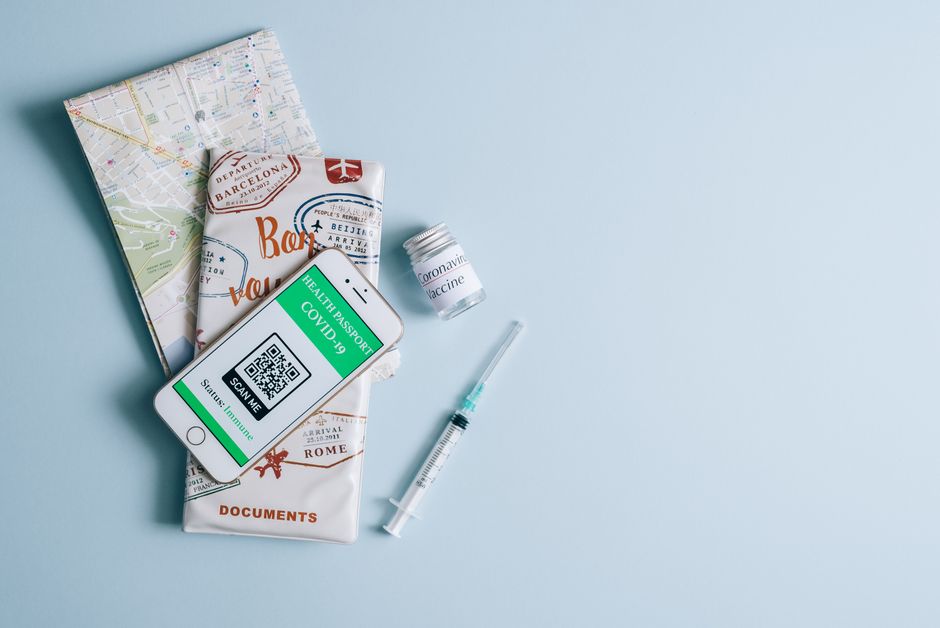
An ESTA payment failure in 2026 is more common than CBP publishes. The fee is debited in two stages: a $4 application fee at submission and the $36 authorization fee only after pre-screen approval. When the second leg fails — bank flag, 3D Secure timeout, or duplicate-charge protection — applicants see a status stuck on “pending” and assume something is wrong with the application itself. Most of the time the application is fine; the payment is the broken leg. This guide explains how to recover the receipt, dispute a double charge, and refile without losing your CBP slot.
How ESTA fees are charged in two stages
The ESTA fee in 2026 is $40 total, but it is charged in two stages and the second stage runs as a separate authorization through the issuing bank. Stage one — the $4 application fee — is charged immediately at submission. Stage two — the $36 authorization fee — runs only after the CBP system has cleared the pre-screen, typically within two hours. The two-stage charge confuses fraud-detection systems at many banks and is the single most common cause of a stuck application in 2026.
When the second leg fails, the application sits in pending status. The traveler sees no error message, no refusal, no approval — just a clock that never ticks past “received.”
Common payment failure error codes
The most common failure codes in 2026 are decline (DO NOT HONOR — the bank rejected the transaction), 3D Secure timeout (the bank pushed an SMS verification that the traveler did not respond to within five minutes), duplicate-charge protection (the bank saw two charges from the same merchant within five minutes and blocked the second), and AVS mismatch (the billing address on file with the bank does not match the address typed in the ESTA form).
Each failure code has a different fix. Decline requires a call to the issuing bank to authorize the international charge. 3D Secure timeout requires retrying with the SMS verification ready. Duplicate-charge protection requires a 24-hour wait or a different card.
How to retrieve a CBP receipt or transaction ID
Recovering the receipt or transaction ID is the first move after a failed payment. CBP’s payment processor — Pay.gov — generates a transaction reference at submission, separate from the ESTA application number. The transaction reference is the only ID the bank can match against, and is the only way to confirm whether the bank declined or the CBP system never received the response. Find it in the email confirmation CBP sends within thirty seconds of submission.
If no email arrives, log in to esta.cbp.dhs.gov, search by application number, and the transaction reference appears under “Payment Information.” Save it before doing anything else; it disappears from the public view 72 hours after the application expires.
Further reading and official sources
- ESTA for minor children and guardians
- ESTA for business travelers
- ESTA fee payment, refunds, and fraud prevention
- CBP international visitors
- the official CBP ESTA portal
Dispute timing and what proof you need
Dispute timing depends on which leg failed. If the $4 application fee was charged twice, the bank will usually reverse the duplicate within five business days under standard merchant chargeback rules. If the $36 authorization fee was charged but the ESTA was refused, contact CBP first — CBP’s policy is that the $36 is only charged on approval, so a charge with a refusal is a known anomaly that customer service can refund within 30 days.
If both fees were charged but the application is stuck in pending, wait the full 72-hour window before disputing. Most stuck applications resolve on their own when the bank’s overnight settlement clears the held authorization.
Accepted card types and 3D Secure rules
Accepted card types are Visa, Mastercard, American Express, Discover, and PayPal. Some applicants report success with regional bank cards, but the CBP payment page does not officially list them. 3D Secure is enforced on all European cards in 2026 and on most US cards under PCI 4.0 compliance. The verification SMS or push notification must be answered within five minutes or the payment fails silently.
Cards with a billing address outside the United States are accepted, but the AVS (Address Verification Service) check requires the billing address typed into the ESTA form to match the bank’s record exactly, including post code format.
Refiling: avoiding duplicate applications
Refiling without losing your CBP slot is the recovery move. The ESTA system allows a duplicate application as long as the original is in “refused,” “expired,” or “abandoned” status. Submitting a duplicate while the original is still “pending” triggers a soft block and a $4 charge on the second submission. Wait 72 hours or until the system marks the original as expired, then re-submit with the same passport details and a different card.
One pro tip: if the original is stuck due to a known bank issue, call CBP’s ESTA helpline at +1 202-325-8000 and request the application be cleared from the system. Reset usually takes one business day.
FAQ
Why is my ESTA payment showing as pending?
The two-stage payment (4 dollars then 36 dollars) can stall when your bank flags the second leg. Wait 72 hours before refiling; most resolve overnight at the bank’s settlement run.
Was I double-charged?
If you see two $4 charges, that is the bank holding both transactions during the merchant settlement. The duplicate falls off within five business days. If both are settled, dispute with the bank.
My ESTA was refused but I was charged $36. Is that normal?
No — the $36 should only be charged on approval. Contact CBP ESTA customer service for a refund of the authorization fee.
Can I use a friend’s credit card?
Yes. CBP does not require the cardholder to be the applicant. The card billing address must match the cardholder, not the applicant.
What if my card keeps being declined?
Use a different card, or call your bank to authorize international charges. Some travelers have success switching to PayPal at the CBP payment step.

The Two-Stage Charge Explained
The $40 ESTA fee in 2026 is debited in two phases. The first $4 is a non-refundable processing fee charged at application submission — even denied applicants forfeit this amount. The remaining $36 authorization fee is charged only after CBP issues an approval. If the second charge fails for any reason — declined card, insufficient funds, 3D Secure timeout, or anti-fraud block — the application enters a 14-day reaffirmation window. Inside that window the applicant can retry payment using the same case number; after 14 days CBP closes the case and a fresh application (with a new $4 fee) is required.
Receipts for both stages are emitted to the applicant’s email address from [email protected]. If neither email arrives within 30 minutes, check the spam folder and the CBP-confirmed sender list before submitting a duplicate application — duplicate cases are merged automatically but the second $4 fee is not refunded. Statements should show the merchant descriptor “USA*CBP-DTOPS WASHINGTON DC” — any other descriptor is a strong indication of a phishing site under 18 USC §1029.

Recovery Path for Disputed Charges and Bank Reversals
If your bank flags the ESTA charge as fraudulent and reverses the transaction, CBP voids the authorization within 48 hours under 31 CFR §1010.306 anti-money-laundering guidelines. The application status moves from “Authorization Approved” to “Travel Not Authorized” without explicit notice. Travelers boarding US-bound flights inside this window face automatic gate denial. To recover, contact the issuing bank to release the reversal, then resubmit a fresh ESTA application — disputed cases cannot be reopened.

For corporate or third-party-paid applications, the cardholder must match the listed Visa Waiver Program traveler when the card is processed under PCI-DSS billing-address verification. Mismatches trigger anti-fraud holds at the second charge stage. Use the same legal name as printed on the passport biographical page, and avoid common abbreviation differences (Bob/Robert, Liz/Elizabeth) that bank fraud filters interpret as account compromise. Always retry from a stable IP — VPN-routed traffic from sanctioned regions raises an automated block under 31 CFR §501 OFAC screening.
FAQ — ESTA Payment Recovery 2026

My ESTA payment failed but the bank shows the charge as pending — what should I do?
Wait 48 hours for the temporary authorization hold to release naturally. Do not retry the same card during this window — duplicate attempts trigger automatic 7-day blocks. After 48 hours, retry with the original card or use a different payment method.
Can I get a refund if my ESTA is denied?
No. The $4 processing fee is non-refundable under 8 USC §1356, and denied applicants never see the $36 authorization charge. Refunds are only issued for accidental duplicate charges on the same case number.
Are there alternative payment methods besides credit card?
ESTA accepts Visa, Mastercard, American Express, Discover, JCB, PayPal, and Apple Pay (on selected gateways). It does not accept bank transfers, cash payments, or cryptocurrency. Corporate purchasing cards are accepted only if the cardholder name matches the application.

One final note: ESTA payment failures spike during the last week of every quarter as US fiscal cycles produce higher-than-average fraud-screening volume. If your application is non-urgent, retry on the first business day of a new quarter — the success rate climbs roughly 6 percentage points based on CBP-DTOPS payment-processor reporting from 2024 through Q1 2026.