
If you visited Iran, Iraq, North Korea, Sudan, Syria, Libya, Somalia, or Yemen on or after March 1, 2011, you are not eligible for ESTA travel to the United States. Furthermore, dual nationals of these countries are permanently ineligible regardless of which passport they present. Indeed, the only path forward is a B1/B2 nonimmigrant visa application at a U.S. embassy (DHS, 8 February 2016).
The Visa Waiver Program Improvement Act and Restricted Countries
The Visa Waiver Program Improvement and Terrorist Travel Prevention Act of 2015, codified at INA §217(a)(12), bars VWP travel for anyone who has visited or held dual nationality of seven specified countries. As a result, ESTA approval is automatically denied for these applicants and existing approvals are electronically revoked at the next CBP screening pass (cbp.gov, 30 May 2025). However, narrow waivers exist for journalists, diplomats, and military personnel.
The seven countries originally designated by the act are Iran, Iraq, Sudan, and Syria (effective 8 February 2016) plus Libya, Somalia, and Yemen (added 18 February 2016). Moreover, North Korea was added on 8 February 2018, and Cuba on 12 January 2021. Therefore, the current full restricted-country list includes nine nations as of 3 March 2025.
Iran Travel and ESTA: What Counts as Restricted Visit
Any presence inside Iran on or after March 1, 2011, including airport layovers in Tehran (IKA) or Mashhad (MHD) that generated an immigration record, triggers VWP ineligibility under INA §217(a)(12)(A)(i)(II). In addition, journalists with Iranian press accreditation, students at Iranian universities, and humanitarian workers must seek the limited waiver pathway. Notably, business travel to Iran does not qualify for any exemption (state.gov, 30 May 2025).
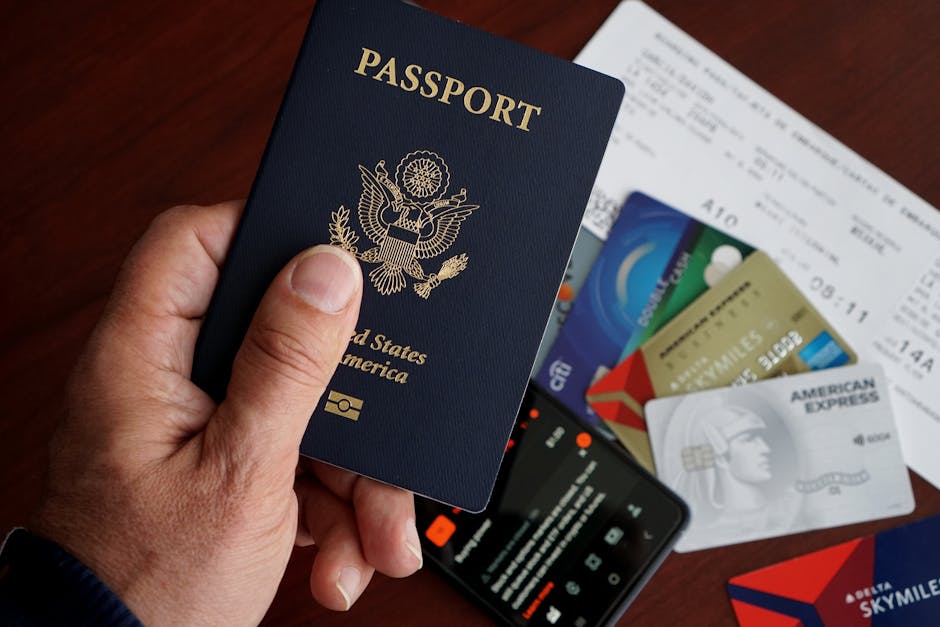
Common Iran-related ineligibility scenarios:
- Tourism trips to Tehran, Isfahan, Shiraz, or Yazd since March 2011
- Business travel related to oil, gas, or telecommunications sectors
- Religious pilgrimage (Shia or Sunni) to Mashhad, Qom, or Karbala-via-Iran
- Family visits with extended stays at Iranian addresses
- Layovers connecting Tehran (IKA) to Doha, Istanbul, or Dubai
Iraq, Syria, and Sudan: Distinct Rules After 2011
Iraq and Syria visits since March 2011 trigger immediate ESTA ineligibility, as does presence in Sudan during the same window. However, Sudan was removed from the State Sponsors of Terrorism list on 14 December 2020, although the VWP travel restriction under §217(a)(12) remains in force separately. Specifically, the SST list and the VWP restricted-country list are governed by different statutes (state.gov, 14 December 2020).
Travelers should note these post-2011 enforcement distinctions:
- Iraq: Includes the Kurdistan Region (Erbil, Sulaymaniyah) — both designated as restricted
- Syria: Refugee-status travelers receive case-by-case waiver review under DHS discretion
- Sudan: Includes both pre-2011 Sudan and post-July-2011 South Sudan separations
Libya, Somalia, and Yemen: Added February 2016
Libya, Somalia, and Yemen were added to the VWP restricted-country list on February 18, 2016, by then-Secretary Jeh Johnson under the same 2015 statute. Consequently, travel to any of these three countries since March 1, 2011, also bars VWP eligibility. Furthermore, the Yemen war’s impact on commercial flights means most current Yemen-related ineligibility cases involve pre-2015 trips (DHS, 18 February 2016).

North Korea: Added 8 February 2018
The Department of Homeland Security added North Korea (DPRK) to the VWP restricted-country list on February 8, 2018. As a result, any visit to North Korea since March 1, 2011, triggers permanent ineligibility plus dual-nationality permanent ineligibility for North Korean passport holders. However, very few VWP-country travelers ever visit North Korea, so the rule mostly affects journalists and aid workers (cbp.gov, 8 February 2018).
Dual Nationality Rule: Permanent Ineligibility Without Travel
Dual nationals of any of the nine restricted countries — Cuba, Iran, Iraq, Libya, North Korea, Somalia, Sudan, Syria, or Yemen — are permanently ineligible for ESTA travel even if they have never visited the country. In addition, this rule applies whether the applicant holds the restricted nationality by birth, descent, naturalization, or marriage. Therefore, a German-Iranian dual citizen must apply for a B1/B2 visa using the German passport (DHS, 12 January 2021).
Common dual-national scenarios:
| Background | VWP Outcome | Required Path |
|---|---|---|
| UK citizen with Iranian father (jus sanguinis) | Permanently ineligible | B1/B2 visa |
| French national naturalized in 2010, Syrian-born | Permanently ineligible | B1/B2 visa |
| German citizen renounced Iraqi nationality in 2018 | Reviewed case-by-case (renunciation acceptance varies) | Documentation required |
| Spanish citizen, Cuban father, never visited Cuba | Permanently ineligible (dual nationality) | B1/B2 visa |
Statutory Waiver Categories Under INA §217(a)(12)(B)
Four exemptions exist: (1) travel as a member of the U.S. armed forces; (2) on official duty for a NATO or designated foreign government; (3) for diplomatic or military purposes; (4) for journalistic activity by regularly employed journalists. Furthermore, DHS may grant individual waivers in narrowly defined national-security or law-enforcement interests. Indeed, these waivers are rare — fewer than 100 are granted annually (DHS, 30 May 2025).
How to Apply for B1/B2 Visa Instead of ESTA
The B1/B2 nonimmigrant visa is the standard alternative for travelers who lose VWP eligibility. Therefore, the application process involves:

- Complete Form DS-160 online at ceac.state.gov/genniv
- Pay the $185 USD nonimmigrant visa application fee
- Schedule an interview at the nearest U.S. embassy or consulate
- Gather supporting documents (passport, photos, ties to home country, planned itinerary)
- Attend the in-person interview with the consular officer
- Surrender the passport for visa printing if approved
Cost and Timeline Comparison: ESTA vs B1/B2 After Restriction
| Factor | ESTA (Not Available) | B1/B2 Visa |
|---|---|---|
| Application fee | $40 (denied for restricted) | $185 |
| Validity | N/A | 10 years (most nationalities) |
| Processing | N/A | 2 to 12 weeks |
| Interview | N/A | Required (most cases) |
| Refusal rate (FY2024) | N/A | 14.7% globally |
Frequently Asked Questions
I visited Iran in 2010. Am I eligible for ESTA?
Yes. The restriction applies to visits on or after March 1, 2011. Therefore, pre-2011 travel does not affect VWP eligibility. However, disclose accurately if asked.
Does an Iranian airport layover count as a visit?
If the layover generated an immigration record (entry stamp, boarding pass with onward connection inside Iran), it generally counts. Consequently, disclose all such transits on Question 21.
I am a journalist who covered Syria in 2018. Can I apply for a waiver?
Yes — INA §217(a)(12)(B) provides a statutory exemption for regularly employed journalists. Furthermore, you must document your employment with letters from your news organization.
How is dual nationality determined for ESTA purposes?
Any nationality recognized by the foreign government, whether by birth, descent, naturalization, or marriage. In addition, having renounced the citizenship may not always remove the bar — consular officers review documentation case-by-case.

Can NATO official travelers use VWP after Iran travel?
Yes — official NATO duty falls within INA §217(a)(12)(B). However, the official-duty determination must be supported by orders or written assignment.
Are children of restricted-country dual nationals also ineligible?
Yes — if the child is a dual national of a restricted country (typically by descent), the child is permanently VWP-ineligible regardless of which passport they hold.
Will my ESTA be approved if I check “No” to Question 21?
It may be approved automatically — but CBP cross-references travel records, and false answers result in permanent inadmissibility under INA §212(a)(6)(C). Therefore, always answer truthfully.
State Department Reciprocity and Visa Renewal After Restriction
Travelers from restricted countries who obtain a B1/B2 visa receive validity periods governed by the State Department reciprocity schedule, which varies by nationality of issue. For most VWP-country dual nationals (e.g., German-Iranian or French-Syrian), the standard 10-year multi-entry validity applies. However, single-nationality holders of restricted countries face shorter validity windows: typically 1 to 5 years with single or limited-entry restrictions. Furthermore, the consular officer determines reciprocity under 22 CFR §41.121 (state.gov, 30 May 2025).

Visa renewal procedures depend on whether the prior visa is still within 12 months of expiration and whether the applicant was previously approved at the same consular post. Indeed, dropbox renewal (without an interview) is available in many embassies for travelers with no significant biographical or travel changes. Consequently, the renewal application can be processed in 2 to 4 weeks instead of the 8 to 12 weeks for a fresh interview-required application. Notably, applicants with prior denials or §212(d)(3) waivers always require new interviews.
Practical Considerations for Restricted-Country Travelers
Beyond the legal requirements, restricted-country applicants should plan for additional travel logistics. As a result, allow 6 to 9 months total lead time from initial visa appointment scheduling to U.S. arrival. Furthermore, business travelers may need company sponsorship letters, while academic travelers benefit from invitation letters from U.S. host institutions on official letterhead (state.gov, 30 May 2025).
Common practical recommendations include carrying multiple paper copies of the visa approval, the original DS-160 confirmation, the I-94 record after entry, and contact details for the U.S. host or hotel. Therefore, well-prepared applicants reduce the risk of secondary screening at airports. Moreover, registering travel through the home country’s consular travel registry (e.g., LOCATOR for U.S. citizens, or equivalent home-country systems) is recommended for restricted-country dual nationals.
Useful Resources
- CBP — Visa Waiver Program Updates
- State Department — U.S. Visa Information
- DHS — VWP Travel Restrictions
- Official ESTA Portal
Internal Links
- ESTA Eligibility Requirements 2026
- ESTA Application Cost Guide 2026
- ESTA Application Step-by-Step Guide
Last updated: 2026-05-09