If your US trip has an onward domestic leg after the first international arrival, the second flight still passes through customs in the eyes of the system. ESTA holders go through CBP at the first port of entry, then a TSA re-check before the connecting domestic flight, then potentially a baggage re-tag depending on the airline interline agreement. This 2026 guide explains the timing, the connection window minimums, and the rebook playbook when the international leg lands late.
Why a domestic leg still passes through customs
An ESTA-cleared traveler with a US domestic onward flight passes through CBP customs at the first US port of entry, then through TSA security at the same port (if the domestic flight departs from a different terminal), then onto the connecting flight. The customs check is the entry event; the TSA check is a separate security event that applies to every domestic departure regardless of nationality.
The complication: the customs check unloads passengers into a public arrivals area, but the domestic terminal is usually airside. Travelers must collect their bags, clear customs, re-check the bags, and re-enter security through a TSA checkpoint.
ESTA holders and the TSA re-check rule
The TSA re-check for ESTA holders is the same as for US citizens. No additional documents are required at the checkpoint — the boarding pass and the passport (or driver’s license for domestic-only travel) are the documents the agent scans. The misconception that ESTA holders need to show their ESTA at the TSA checkpoint creates unnecessary anxiety; the ESTA is verified at the international arrival, not at the domestic departure.
The exception is when the domestic flight is on a different airline from the international arrival. In that case, the second airline’s gate agent verifies the ESTA in real time before boarding.
Baggage tag-through vs collect-and-recheck
Baggage tag-through versus collect-and-recheck depends on the interline agreement between the two airlines. If your international and domestic flights are on the same airline or on an interlined partner, the bags are tagged through to the final destination; you collect them after customs only for the CBP visual check, then drop them at the interline counter. If the airlines are not interlined, you collect, clear, and re-check at the new airline’s counter.
The interline status is printed on your e-ticket as the baggage routing. Check it before travel; the difference between tagged-through and collected can be 60 minutes of connection time.
Further reading and official sources
- 2026 ESTA fee increase to $40
- ESTA family data requirements at CBP
- ESTA after a new US passport
- CBP international visitors
- US Department of State visitor visa
Minimum connecting times by airport
Minimum connection times at major US airports for international-to-domestic in 2026: JFK 90 minutes, LAX 90 minutes, ORD 120 minutes, ATL 90 minutes, IAD 100 minutes, MIA 90 minutes, SFO 100 minutes. These are the airline-published minimums; the actual time needed varies by airline and terminal. Allow at least 30 minutes of buffer.
For arrivals through a CBP pre-clearance airport abroad (Dublin, Toronto, Aruba), the customs check happens before boarding the US-bound flight. On arrival in the US, you go directly to the domestic terminal — no customs, no re-check.
Missed connection ESTA rebook playbook
If the international leg lands late and you miss the domestic connection, the airline’s IATA rule 240 (or its equivalent in 2026) applies: the carrier rebooks at no cost. The ESTA does not need to be re-applied for; the boarding-pass for the new flight is endorsed in the same CBP authorization. The complication is when the rebook spans multiple airlines and the receiving carrier does not see the original CBP authorization.
Solution: call the original airline’s 24-hour line and request a manifest update to the new carrier. The process usually takes under 30 minutes.
Onward to Canada or Mexico same day
If the onward leg goes to Canada or Mexico the same day (a same-day Mexico City connection through Houston, for instance), the ESTA covers the US transit time and the Canadian or Mexican entry is governed separately by those countries’ rules. Canada requires an eTA for VWP nationals; Mexico requires a tourist FMM card. Both are filed online in advance.
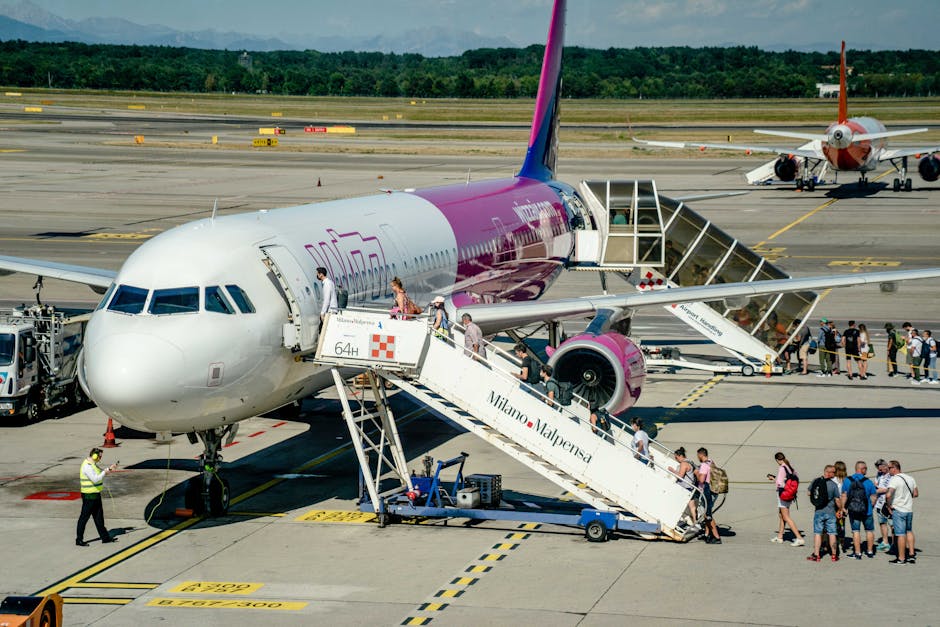
The same-day rule: the I-94 is not closed on the day of departure if you return to the US within the next 24 hours. The CBP system treats the cross-border trip as a continuation of the original ESTA stay.
FAQ
Do I clear customs at every US airport on my trip?
No. Customs is cleared once at the first US port of entry. Domestic onward flights are TSA security only, no customs.
Will my bags be tagged through to my final US destination?
Depends on the airline interline agreement. Same airline or interlined partner: tagged through. Different airlines without interline: collect and re-check.
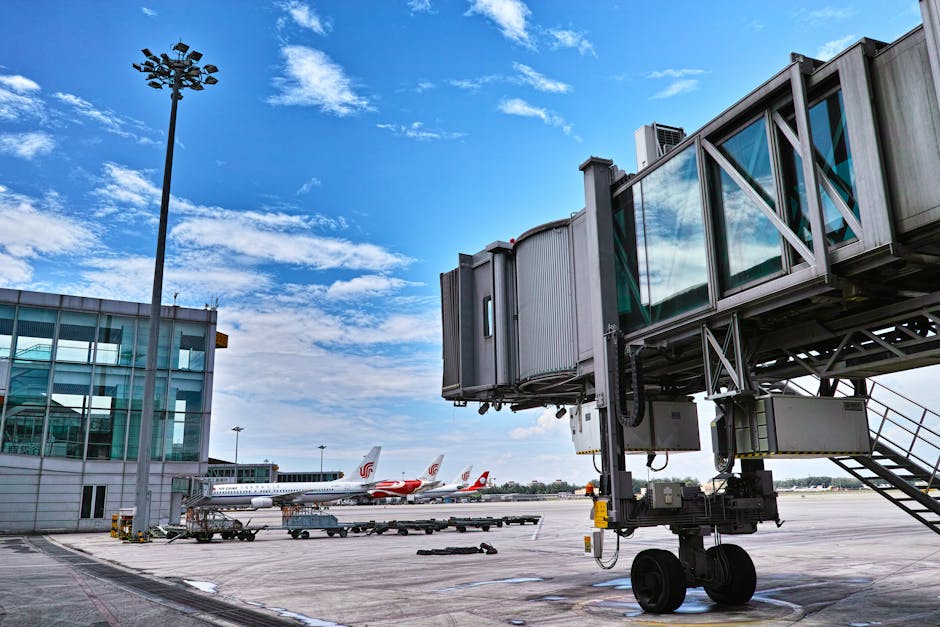
What is the minimum connection time at JFK for international-to-domestic?
JFK publishes 90 minutes as the airline minimum. Allow 30 minutes of buffer.
Do I need a separate ESTA for a Canadian onward flight from the US?
No. Your ESTA covers the US transit. You may need a Canadian eTA for the Canadian entry.
What if I miss my domestic connection?
Same as international missed connections — the airline rebooks under IATA rule 240. The ESTA does not need to be re-applied for.
How CBP and the airline treat an onward domestic leg
The U.S. Customs and Border Protection (CBP) inspection happens at your first port of entry, not at the connecting city. Under 19 CFR §122.49a, the inbound air carrier transmits Advance Passenger Information System (APIS) data to CBP before the wheels go up at your origin airport. When you land in the United States, you clear the CBP primary inspection booth, collect any checked baggage, drop it on the recheck belt, and re-clear the Transportation Security Administration (TSA) checkpoint before boarding your onward domestic flight. The Electronic System for Travel Authorization (ESTA) approval does not need to be presented again at the gate of the onward flight, because once you cleared CBP you are already an admitted nonimmigrant under INA §214(a).
The airline, however, can still hold you back at the gate of the international leg if its DHS interactive Advance Passenger Information System (iAPI) probe returns a “not cleared to travel” board response. CBP publishes those response codes in 9 FAM 403.10-3(B) and a typical reason is an ESTA that has been overtaken by passport changes since approval, an unpaid USD 21 fee, or a name mismatch between the ESTA and the machine-readable zone of the passport. Travelers are advised to log into the ESTA portal at least 72 hours before the first flight and verify that status: Authorization Approved still displays for the exact passport number being presented at the airline check-in counter.
Domestic recheck baggage and the 60-minute connection rule
U.S. carriers participating in the International-to-Domestic baggage program (operators of the IATA 240 recheck belt at major hubs such as JFK Terminal 4, MIA Terminal J, LAX Tom Bradley, ORD Terminal 5, ATL Concourse F, and IAH Terminal D) require a minimum connection time (MCT) of 60–90 minutes for international-to-domestic itineraries. If your onward flight departs in less than that window, you have a “short connection” and the airline may rebook you proactively. ESTA does not extend an MCT — it only authorizes you to seek admission; the airline’s operational rules are separate. Travelers who miss the onward flight remain admitted to the United States and can rebook a later same-day flight at the airline desk, but they must clear TSA again with their carry-on.
What to do if your inbound flight is diverted to a different U.S. city
If weather, mechanical issues, or air-traffic delays divert your inbound flight to a non-scheduled port of entry — for example, an Atlanta-bound flight that lands in Charlotte — you still clear CBP at the diversion airport. Your ESTA is valid at any of the 328 CBP ports of entry listed in 8 CFR §100.4. The onward domestic ticket remains under the same passenger name record (PNR), and the airline’s irregular-operations desk will rebook the connection at no extra charge under the Department of Transportation’s voluntary commitments published in 14 CFR Part 259. Keep the original boarding pass: it is your proof of the protected connection if you need to claim trip-interruption insurance later.
Frequently asked questions about ESTA and connecting flights
Do I clear CBP at my final domestic airport?
No. CBP inspection happens at your first U.S. port of entry, even if your final destination is two flights away. The onward flight is treated as a domestic segment.
Can I leave the airport between flights to visit a friend in the connecting city?
Yes — once CBP has admitted you, you are inside the United States and can leave the airport. Just be sure you can return through TSA in time for the onward flight; ESTA does not protect you from missing it.
What if my checked bag does not make the connection?
File a Property Irregularity Report (PIR) at the baggage office of the final airline; under 14 CFR §254.4 the carrier delivers the bag to your U.S. address at no charge. ESTA status is not affected by a delayed bag.
Does my ESTA cover a same-day onward flight to a U.S. territory like Puerto Rico or the USVI?
Yes. Puerto Rico, USVI, Guam, and CNMI are U.S. territories and the onward leg is treated as a domestic flight. Your ESTA admission stamp covers the full 90-day stay in any U.S. territory or state.